MASTER PROGRAM

Master of Science in Microbiology

A flexible graduate program designed to train learners in medical, food, environmental and applied microbiology through online learning, scientific analysis and research-based academic work.

36 Credits
4 Semesters
80% Online
Winter 2028
English-first
EN / FR Support
Master of Science in Microbiology

Program Level

Master’s Degree

Microbiology Research Focus
Program Snapshot

Level

Master’s Degree

Credits

36 credits

Duration

4 semesters

Format

80% Online

Opening

Expected Winter 2028

Language

English (EN/FR Support)

Tuition : To be confirmed

Program Overview

The Master of Science in Microbiology at AmeriBridge University provides advanced training in medical, food, environmental and applied microbiology.

This program prepares learners to understand microbial diversity, analyze microorganisms, explore diagnostic methods and contribute to research and practical solutions in health, biotechnology, food safety and environmental contexts.

“Designed for learners who want to connect microbiology, diagnostics and research to real health, food and environmental challenges.”

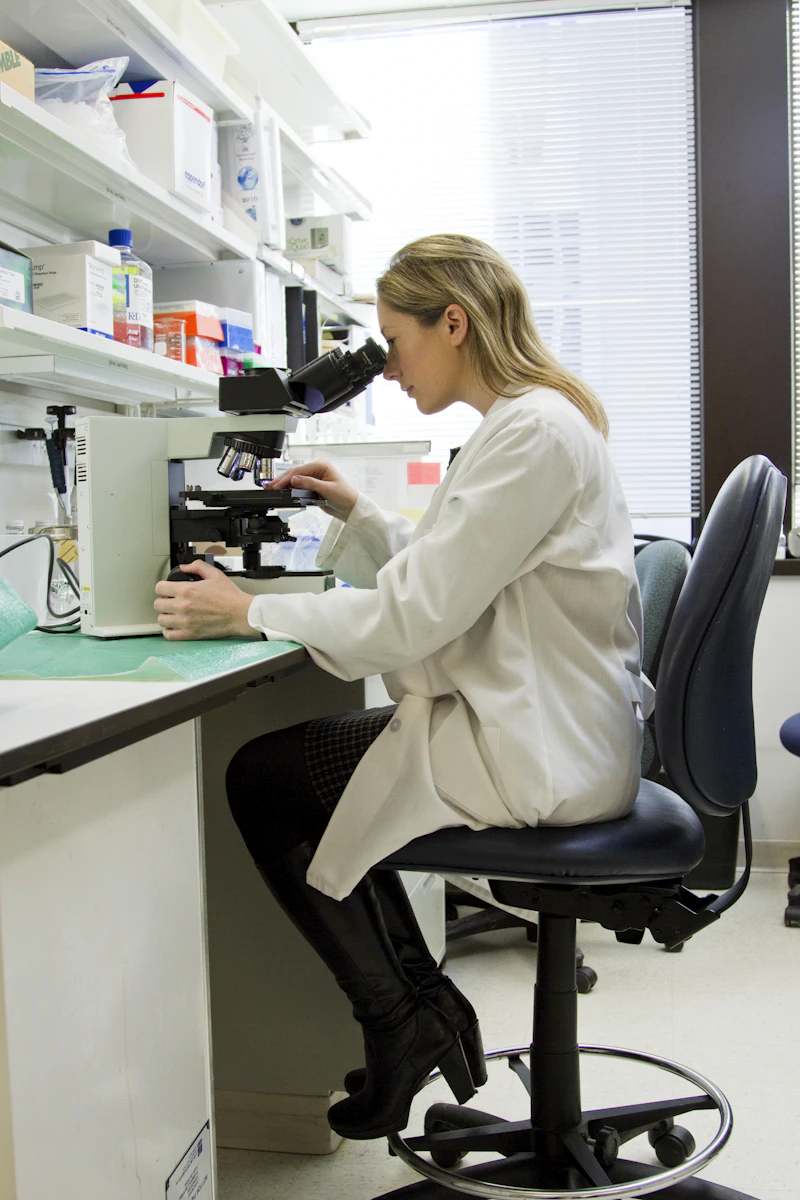
Microbiological Analysis

What You Will Learn

Develop advanced knowledge in microorganisms, diagnostics, applied microbiology and research methods.

Medical Microbiology

Understand microorganisms involved in human disease and clinical contexts.

Environmental Microbiology

Explore microbial life in ecosystems, water, soil and environmental systems.

Food Microbiology

Study microorganisms involved in food safety, quality control and public health.

Microbial Genetics

Learn how genetic mechanisms influence microbial behavior, diversity and adaptation.

Molecular Microbiology

Explore molecular tools used to analyze microorganisms and support diagnostics.

Research & Bioinformatics

Develop research skills and use data-driven approaches to study microbial systems.

Program Structure

The program is structured around online learning, scientific coursework, applied microbiology and research-based academic validation.

Core Microbiology Courses

Medical, food, environmental, microbial genetics and molecular microbiology.

Applied Scientific Learning

Case studies, readings, assignments, diagnostics and microbiology-based analysis.

Research Component

Students strengthen academic research skills and prepare structured research work.

Final Validation

Academic requirements are reviewed before final validation and certification.

The detailed semester-by-semester curriculum may be updated according to academic planning and institutional validation.

Admission & Tuition

Admission Requirements

  • Identity document or passport
  • Previous degree certificate
  • Official transcripts
  • Updated CV or resume
  • Motivation letter
  • Recommendation letters if required
  • Proof of English proficiency
  • Admissions interview

Tuition & Fees

  • Tuition: To be confirmed
  • Application fee: To be confirmed
  • Payment methods: Card, PayPal or Bank Transfer
  • LMS access: After admission and payment

Final enrollment and LMS access are confirmed after academic review and financial validation.

Career Opportunities

The Master of Science in Microbiology can support career development in laboratory sciences, biomedical research, diagnostics, food safety, environmental monitoring and academic progression.

Microbiology Laboratory Assistant Biomedical Research Assistant Medical Microbiology Support Food Safety Specialist Environmental Monitoring Officer Clinical Research Assistant Biotechnology Roles Public Health Lab Support PhD Preparation
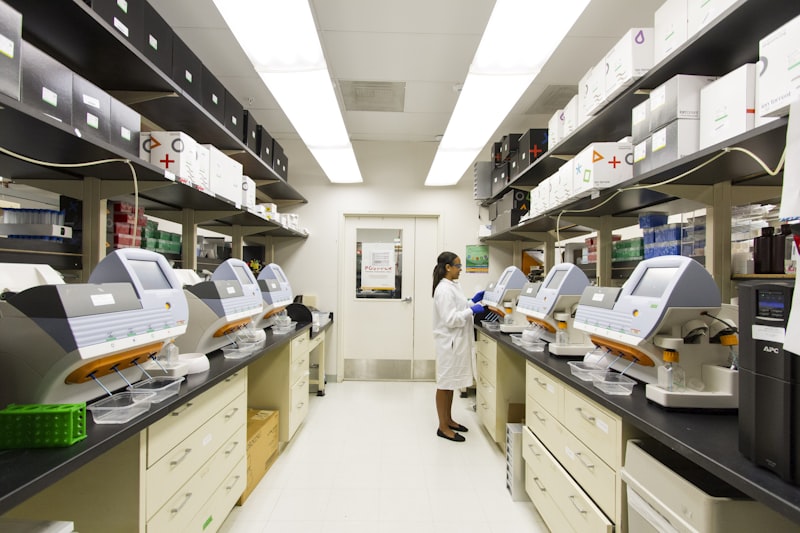
Career in Microbiology

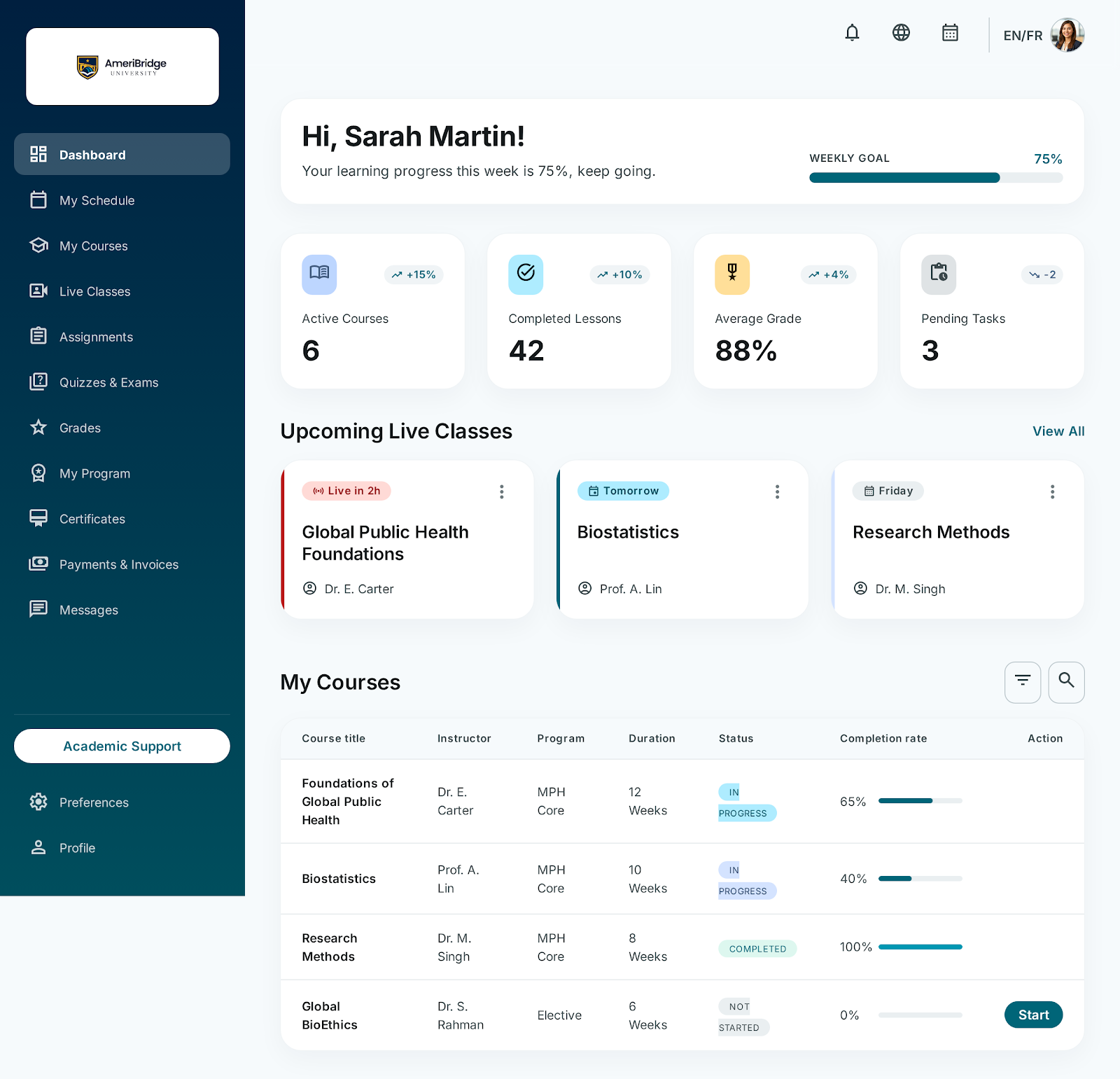
Study through the AmeriBridge LMS

After admission and payment validation, students access the AmeriBridge LMS to follow courses and track their progress.

AmeriBridge LMS Mockup
Course videos
PDF resources
Scientific readings
Assignments
Quizzes and exams
Grades
Certificates
Student support
READY TO STUDY

Ready to study Microbiology online?

Start your application and join a flexible academic pathway designed for future microbiology professionals, biomedical learners and research-focused students.